LogoTimeline

BMW

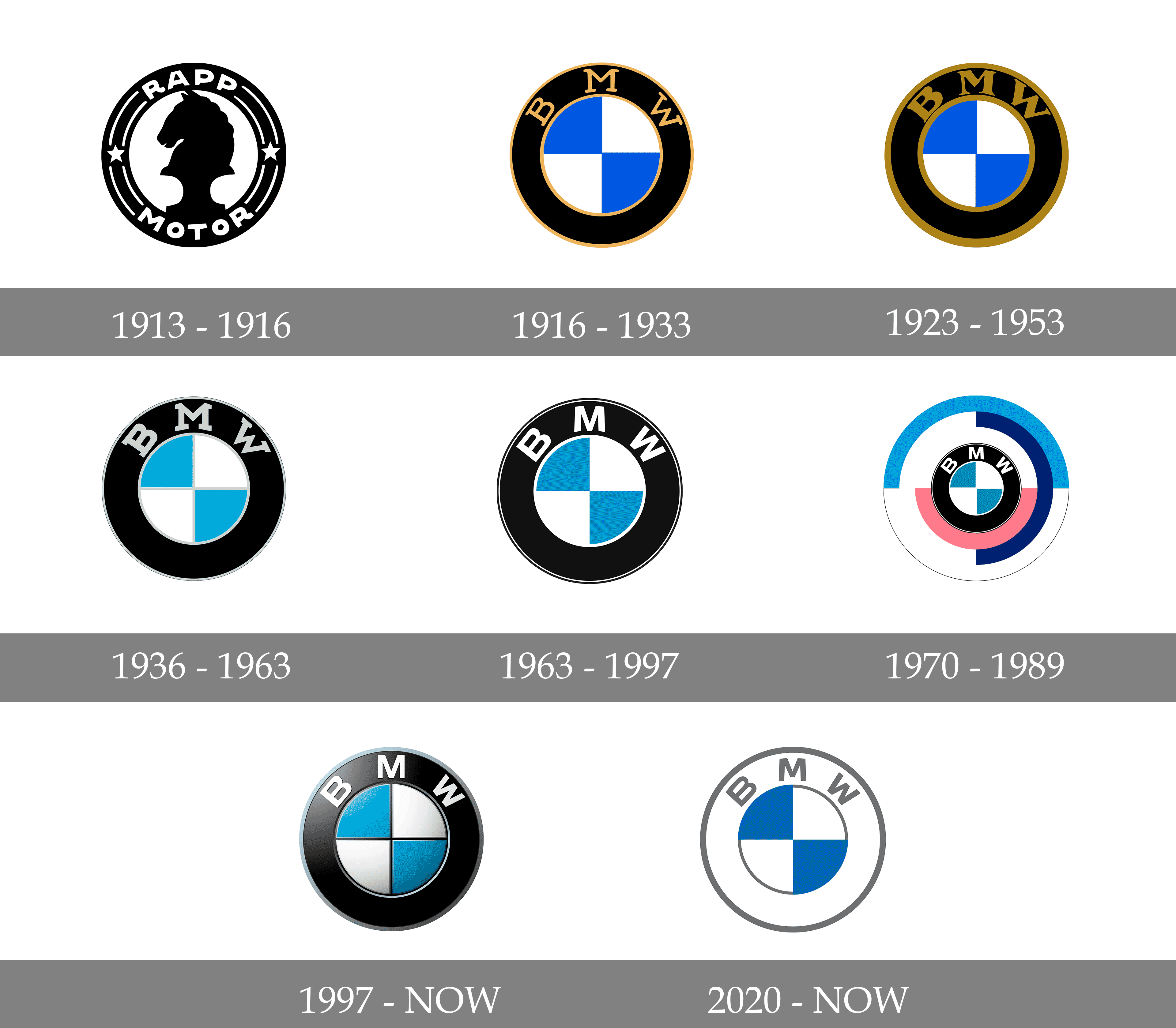
8 logo version 7 baar badla 1913 se shuru 113 saal ka safar sabse lamba chala 1963 – 1997 262 events 92 saal me events mile

The legendary German car brand BMW is associated with the speed available to everyone. These are cars produced serially but with all the signs of elite transport. The company has existed since 1916, and during the World War, it was famous for the supply of motorcycles and aircraft engines for the German army. Already a year after the company was founded, in 1917, the first version of the famous BMW logo appeared a circular emblem resembling both a wheel and a propeller. The iconic logo has been a hot topic of discussion for many years. And all because of a publicity stunt, where a propeller was depicted in the background of an airplane. Bayerische Motoren Werke AG, universally known as BMW, was founded by Franz Josef Popp, Karl Rapp, and Camillo Castiglioni in 1916. Initially, the company was established to manufacture aircraft engines, which it did from 1917 until 1918 and again from 1933 to 1945. The company’s shift from aircraft engines to motorcycle and automobile production marked a significant pivot in its history, setting the stage for BMW to become a prominent name in luxury vehicles and motorcycles. The company name, BMW, and the iconic company logo, which is commonly misconstrued as a stylized propeller, were inspired by the company’s early involvement in aviation. Historians have clarified that the logo represents the Bavarian flag’s colors, blue and white, arranged in inverse order, challenging the common narrative that it depicts rotating airscrews. Throughout the 20th century, BMW achieved remarkable milestones that solidified its status in the automotive industry. In the 1970s, under the guidance of exterior designer Paul Bracq and interior designer Wolfgang Seehaus, BMW introduced a series of sporty sedans that redefined the luxury car market. The creation of the BMW M GmbH subsidiary in 1972, initially to support the company’s racing program, led to the development of high-performance models such as the M1, crafted by the renowned designer Giorgetto Giugiaro. This period also saw the introduction of the BMW 3 Series, which became a benchmark for the compact executive car segment. BMW’s commitment to innovation was further demonstrated in collaborations with Pratt & Whitney for engine development and the adoption of new content in advertising, spearheaded by external graphic designer Pierre Mendell, showcasing BMW’s blend of luxury and performance. Today, BMW stands as a global leader in the production of premium vehicles and motorcycles, embracing trends in electrification, digitalization, and sustainable mobility. The company’s current position is significantly influenced by the leadership of Jens Thiemer, the VP of Customer and Brand, who emphasizes the importance of adapting to a rapidly changing market. BMW’s new brand design, unveiled in March 2020, reflects a shift towards a more digital and customer-centric approach, with a focus on a wide variety of contact points in the digital and physical worlds. The reimagined brand identity and commercial logos aim to connect more deeply with a younger demographic, demonstrating BMW’s ongoing evolution while staying true to its heritage. BMW’s commitment to innovation, exemplified by its investments in electric vehicles and autonomous driving technology, continues to shape the future of mobility, ensuring the company’s relevance and leadership in the automotive industry for years to come. The first car, released under the BMW brand, was called Dixi (Latin – “I said”, “I said everything”). This is how the ancient Roman philosophers finished their monologues. Indeed, the high-speed compact car Dixi became a new word in the automotive industry, setting a record speed of 1920-1930-ies.One version of the logo design appeals to the flag of Bavaria as the main object of this logo (on the flag alternate blue and white rhombuses). And really, why not consider this version?

Logo timeline  ·  kisi bhi logo par click karo
BMW logo 1913 – 1916

1913 – 1916

Logo #1 of 8  ·  ~3 saal chala

Logo me kya badla

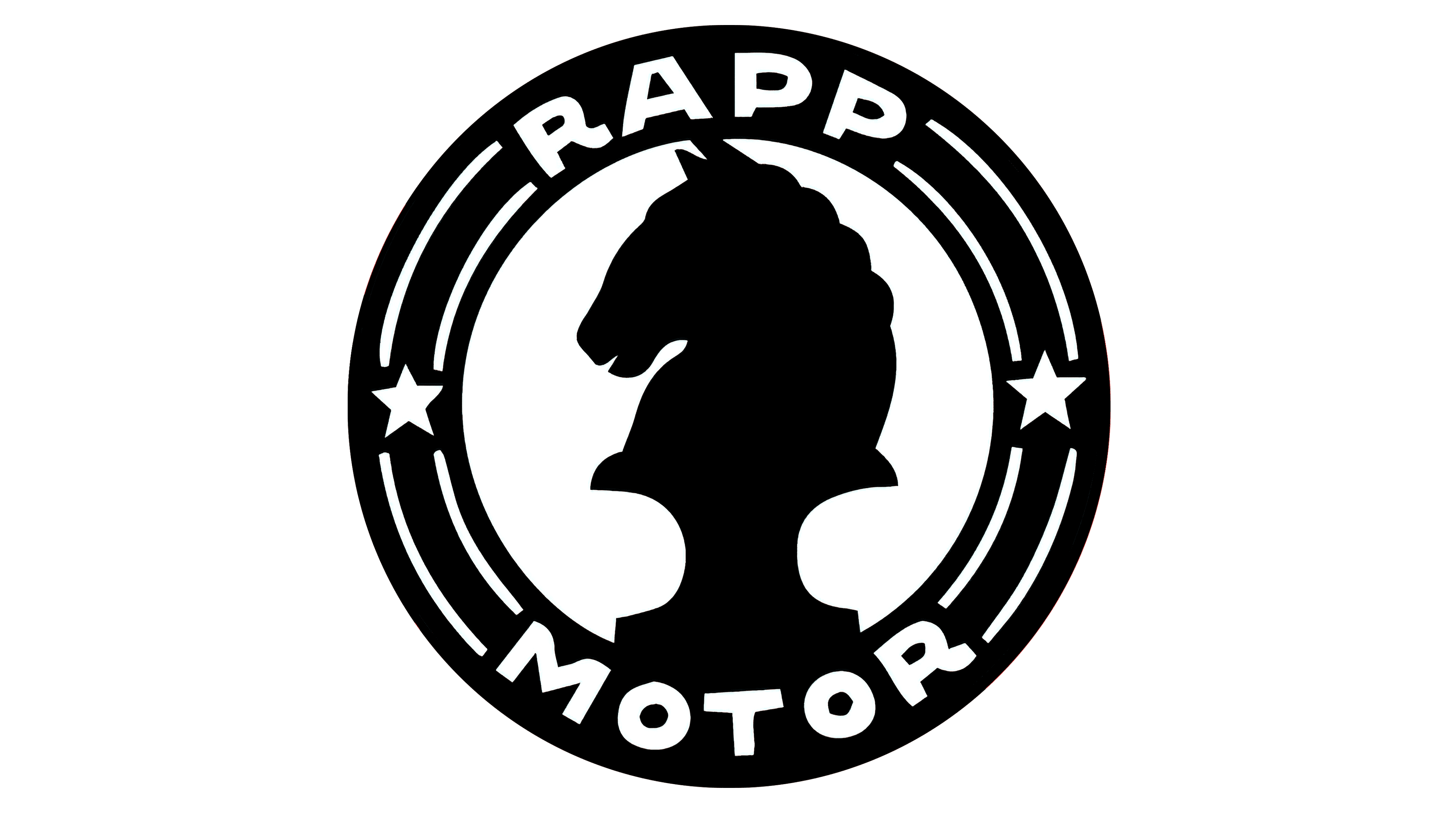
The RAPP logo, designed in 1913 was composed of a circular medallion with a thick black framing, where two delicate white stripes and two white stars were placed, separating the “RAPP MOTOR” wordmark in all capitals. Inside the circle, there was a black horse silhouette in profile. The chess knight figurine was turned to the left.

Is daur me company me kya hua 1913 – 1916 4 events
1600
The following year, the two-door version of the 1600 was launched, along with a convertible in 1967. 1952–1958: Production resumes in Munich
1910
BMW traces its origins to aircraft engine manufacturer Otto Flugmaschinenfabrik, founded in 1910 by Gustav Otto in the Kingdom of Bavaria, then part of the German Empire. History
1913
The name BMW, however, had earlier been used by a company founded in 1913 by Karl Rapp as Rapp Motorenwerke. History
1913
The history of the name itself begins with Rapp Motorenwerke, an aircraft engine manufacturer which was established in 1913 by Karl Rapp. 1913–1918: World War I
BMW logo 1916 – 1933

1916 – 1933

Logo #2 of 8  ·  ~17 saal chala  ·  pichhle logo ke 3 saal baad

Logo me kya badla

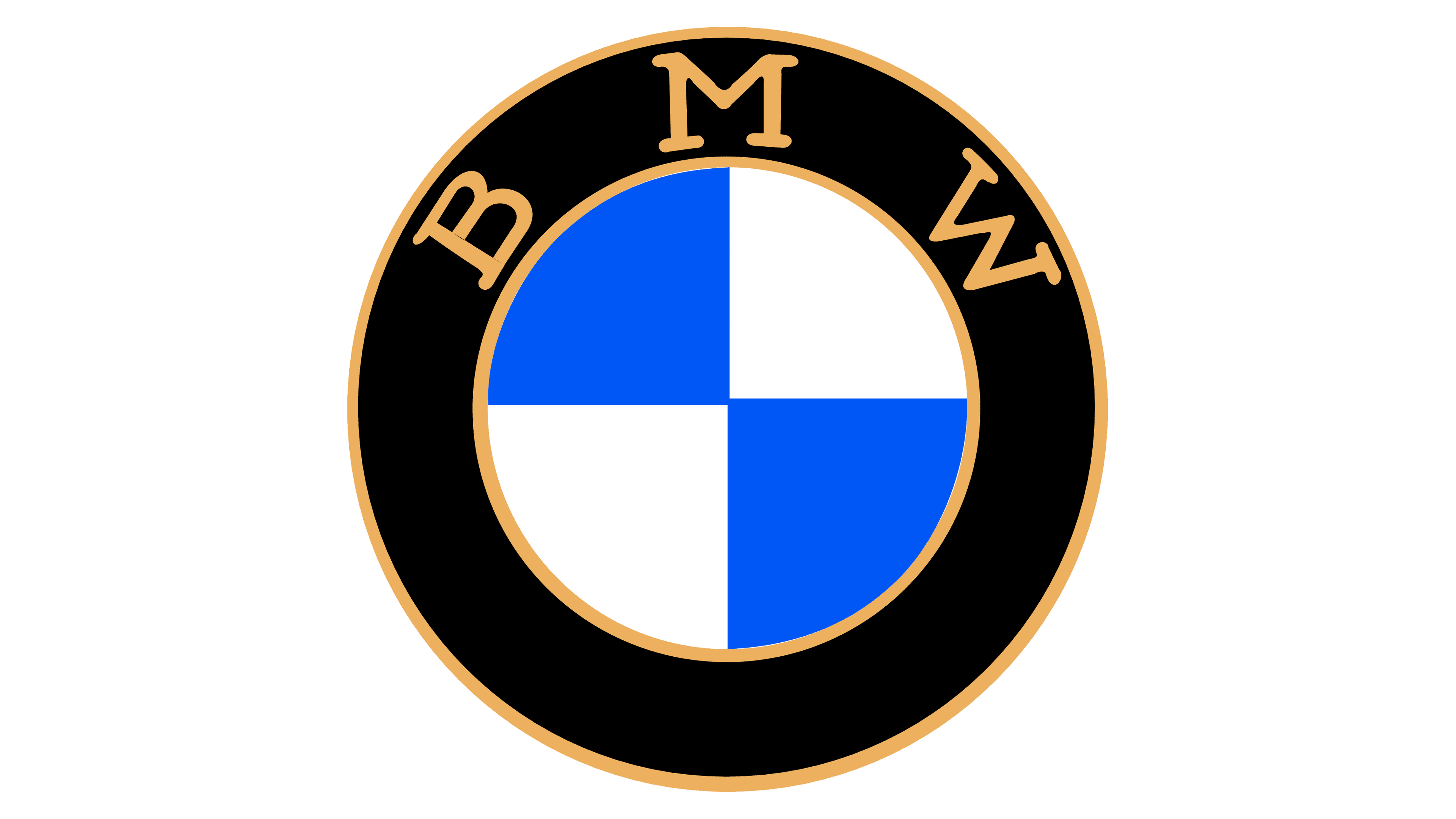
The first version of the iconic blue and white checkered insignia was designed in 1916. It featured a thick black framing with a thin gold outline and “BMW” letters in a rounded serif typeface arched along its upper part. The inner-circle was composed of a bright blue and white pattern, resembling of the plane’s propeller, and representing the company’s value of its legacy and roots. The choice of colors is pretty easy to explain — blue and white is the official palette of the Bavarian Flag.

Is daur me company me kya hua 1916 – 1933 34 events
1916
The official founding date of the German motor vehicle manufacturer BMW is 7 March 1916, when an aircraft producer called Bayerische Flugzeugwerke (formerly Otto Flugmaschinenfabrik) was established.
1916
BMW's corporate history considers the founding date of Bayerische Flugzeugwerke (7 March 1916) to be the birth of the company. 1913–1918: World War I
1917
The moniker "BMW " first came into use when the German firm Rapp Motorenwerke changed its name to Bayerische Motoren Werke GmbH (BMW GmbH) in 1917.
1917
One of its early designs was the BMW IIIa, a straight-six engine developed in 1917 by engineer Max Friz. History
1917
However, the BMW name dates back to 1917, when Rapp Motorenwerke changed its name to Bayerische Motoren Werke.
1918
This was not enough and the company was suspended, effectively bankrupt, from 6 November 1918 to 1 February 1919.
1918
Following Wiedmann's capitulation, the company was renamed from BMW GmbH to BMW AG and registered as a company on 13 August 1918, taking over the manufacturing assets, order book and workforce from BMW GmbH. 1918–1923: Post-war aftermath
1918
After the end of World War I in 1918, BMW was forced to cease aircraft engine production by the terms of the Treaty of Versailles. 1918–1923: Post-war aftermath
1920
The major shareholder in BMW, Vienna based Italian speculator Camillo Castiglionli, sold all of his shares to Knorr Bremse in May 1920, who then acquired the remaining shares to make BMW a wholly owned subsidiary still run by Popp.
1920
In 1920, BMW M2B15 flat-twin petrol engine was released. 1921–1938
1920
The BMW M2B15 industrial engine was also used in various motorcycles, including the 1920 Helios model built by Bayerische Flugzeugwerke (which would later merge with BMW). 1918–1923: Post-war aftermath
1921
BMW's motorcycle history began in 1921 when the company commenced manufacturing engines for other companies. Motorcycles
1922
In 1922, the name and engine-production assets of Rapp Motorenwerke were transferred to Bayerische Flugzeugwerke, which adopted the BMW name in the same year. History
1922
BMW merged with Bayerische Flugzeugwerke in 1922, and the BFw Helios became the starting point for the first BMW motorcycle. 1921–1938
1922
Thereafter, in 1922, the name and assets of BMW GmbH were transferred to the aircraft manufacturer Bayerische Flugzeugwerke AG (formerly Otto Flugmaschinenfabrik), thereby giving rise to the company known today as BMW AG.
1922
This was not enough and BMW became a sub-contract manufacturer for braking system manufacturer Süddeutsche Bremsen-AG, now known as Knorr-Bremse On 20 May 1922, Camillo Castiglioni purchased back the rights to the name BMW for 75 million reichsmarks. 1918–1923: Post-war aftermath
1923
In 1923, the company introduced its first motorcycle, the BMW R32. History
1923
Their first successful motorcycle after the failed Helios and Flink, was the "R32" in 1923, though production originally began in 1921. Motorcycles
1923
BMW's own motorcycles— sold under the BMW Motorrad brand— began in 1923 with the BMW R 32, which was powered by a flat-twin engine (also called a "boxer-twin" engine). Motorcycles
1923
There the company produced its first motorcycle in 1923.
1923
Released in 1923, the BMW R 32 used a 486 cc (29.7 cu in) flat-twin petrol engine, which was longitudinally-mounted to eliminate the cooling problems of the transversely mounted engine in the Helios. 1921–1938
1925
The first single-cylinder BMW motorcycle was the 1925 BMW R 39, which was BMW's smallest model and used a 250 cc (15.3 cu in) engine. 1921–1938
1925
The BMW R 37, produced from 1925 to 1926, was BMW's first sporting model. 1921–1938
1927
Eisenach's current model was the Dixi 3/15, a licensed copy of the Austin 7 which had begun production in 1927. 1923–1939: Start of production
1927
It was not successful and was discontinued in 1927. 1921–1938
1928
BMW became an automobile manufacturer in 1928 following its acquisition of Fahrzeugfabrik Eisenach, which produced the Austin 7 under licence from Austin Motor Company, marketed as the Dixi. History
1928
BMW became an automobile manufacturer in 1928 when it purchased Fahrzeugfabrik Eisenach, which built Austin Sevens at that time under licence (under the Dixi marque).
1928
BMW's production of automobiles began in 1928, when the company purchased the Automobilwerk Eisenach car company from Gothaer Waggonfabrik. 1923–1939: Start of production
1929
This myth likely stems from a 1929 BMW advertisement that depicted the logo superimposed on a rotating propeller. Logo
1930
The BMW R 11, introduced in 1930, was the first touring motorcycle in the 750cc class manufactured by BMW with a pressed-steel frame. 1921–1938
1930
Towards the end of 1930, BMW attempted to introduce a new front axle with independent wheel suspension for both their models, the BMW 'Dixi' 3/15 DA4 and BMW 'Wartburg' DA3, but this resulted in accidents with the prototypes because of construction faults. 1923–1939: Start of production
1931
The next single-cylinder motorcycle was the BMW R 2, which was released in 1931. 1921–1938
1932
In 1932, the BMW 3/20 became the first BMW automobile designed entirely by BMW. 1923–1939: Start of production
1932
The lineage of single-cylinder motorcycles continued with the 400 cc (24.4 cu in) BMW R 4 in 1932 and the 300 cc (18.3 cu in) BMW R 3 in 1936. 1921–1938
BMW logo 1923 – 1953

1923 – 1953

Logo #3 of 8  ·  ~30 saal chala  ·  pichhle logo ke 7 saal baad

Logo me kya badla

In 1923 the logo was modified and modernized: the contours were cleaned and made bolder. Now the framing became even thicker than it used to be due to the enlargement of the Golden outline. As for the main change, it was definitely the typeface of the gold “BMW” lettering, which became sleeker and chicer now with smooth bold serif lines.

Is daur me company me kya hua 1923 – 1953 43 events
1923
In 1923, the company introduced its first motorcycle, the BMW R32. History
1923
Their first successful motorcycle after the failed Helios and Flink, was the "R32" in 1923, though production originally began in 1921. Motorcycles
1923
BMW's own motorcycles— sold under the BMW Motorrad brand— began in 1923 with the BMW R 32, which was powered by a flat-twin engine (also called a "boxer-twin" engine). Motorcycles
1923
There the company produced its first motorcycle in 1923.
1923
Released in 1923, the BMW R 32 used a 486 cc (29.7 cu in) flat-twin petrol engine, which was longitudinally-mounted to eliminate the cooling problems of the transversely mounted engine in the Helios. 1921–1938
1925
The first single-cylinder BMW motorcycle was the 1925 BMW R 39, which was BMW's smallest model and used a 250 cc (15.3 cu in) engine. 1921–1938
1925
The BMW R 37, produced from 1925 to 1926, was BMW's first sporting model. 1921–1938
1927
Eisenach's current model was the Dixi 3/15, a licensed copy of the Austin 7 which had begun production in 1927. 1923–1939: Start of production
1927
It was not successful and was discontinued in 1927. 1921–1938
1928
BMW became an automobile manufacturer in 1928 following its acquisition of Fahrzeugfabrik Eisenach, which produced the Austin 7 under licence from Austin Motor Company, marketed as the Dixi. History
1928
BMW became an automobile manufacturer in 1928 when it purchased Fahrzeugfabrik Eisenach, which built Austin Sevens at that time under licence (under the Dixi marque).
1928
BMW's production of automobiles began in 1928, when the company purchased the Automobilwerk Eisenach car company from Gothaer Waggonfabrik. 1923–1939: Start of production
1929
This myth likely stems from a 1929 BMW advertisement that depicted the logo superimposed on a rotating propeller. Logo
1930
The BMW R 11, introduced in 1930, was the first touring motorcycle in the 750cc class manufactured by BMW with a pressed-steel frame. 1921–1938
1930
Towards the end of 1930, BMW attempted to introduce a new front axle with independent wheel suspension for both their models, the BMW 'Dixi' 3/15 DA4 and BMW 'Wartburg' DA3, but this resulted in accidents with the prototypes because of construction faults. 1923–1939: Start of production
1931
The next single-cylinder motorcycle was the BMW R 2, which was released in 1931. 1921–1938
1932
In 1932, the BMW 3/20 became the first BMW automobile designed entirely by BMW. 1923–1939: Start of production
1932
The lineage of single-cylinder motorcycles continued with the 400 cc (24.4 cu in) BMW R 4 in 1932 and the 300 cc (18.3 cu in) BMW R 3 in 1936. 1921–1938
1933
Günther Quandt was a well-known German industrialist and joined the Nazi Party in 1933; he made a fortune arming the Wehrmacht, manufacturing weapons and batteries. History
1933
BMW's first automotive straight-six engine was released in 1933, in the BMW 303, which was larger and more conventional than its 3/20 predecessor. 1923–1939: Start of production
1933
Quandt joined the Nazi party in 1933 and made a fortune arming the German Wehrmacht, manufacturing weapons and batteries.
1935
The BMW R 12 and BMW R 17, both introduced in 1935, were the first production motorcycles with hydraulically damped telescopic forks. 1921–1938
1936
The 303 platform was supplemented in 1936 by the BMW 326, a larger luxury car with a more rigid frame. 1923–1939: Start of production
1936
From its introduction at the Eifelrennen race at the Nürburgring in 1936, where Ernst Henne drove it to win the 2.0 litre class, to the overall victory of Fritz Huschke von Hanstein at the 1940 Brescia Grand Prix during World War II. 1923–1939: Start of production
1936
Also in 1936, the BMW 328 sports car replaced the 315/1 and 319/1. 1923–1939: Start of production
1937
In 1937, Ernst Henne recorded a top speed of 279.5 km/h (173.7 mph) on a BMW 500 Kompressor racing motorcycle, setting a world record that stood for 14 years. 1921–1938
1937
The 328 was highly successful in motor racing, with more than 100 class wins in 1937 alone. 1923–1939: Start of production
1938
It was either licensed to the Soviet Union in 1938 or just copied there, resulting in the Dnepr M-72 (produced from 1942 to 1960) and IMZ-Ural (modernised version still in production) motorbikes . 1921–1938
1939
In 1939, BMW bought Brandenburgische Motorenwerke, also known as Bramo, from the Siemens group of companies and merged it with its aircraft engine division under the name BMW Flugmotorenbau GmbH. 1939–1945: World War II
1939
The BMW 335 luxury car was produced from 1939 to 1941. 1923–1939: Start of production
1941
During the war, against the wishes of Popp, BMW concentrated on aircraft engine production, with military motorcycles as a side line, and automobile manufacture stopped altogether in 1941, under government prohibition.
1945
Over 30,000 aero engines were manufactured through 1945, as well as over 500 jet engines such as the BMW 003. 1939–1945: World War II
1945
The factory at Eisenach was taken over by the Soviet Awtowelo Company. and resumed production of the BMW 321 in 1945, just after motorcycle production also resumed. 1945–1951: Post-war rebuilding
1947
In 1947, the newly formed Bristol Cars released their 400 coupé, a lengthened version of the BMW 327. that featured BMW's double-kidney grille. 1945–1951: Post-war rebuilding
1947
In 1947, when BMW received permission to restart motorcycle production from US authorities in Bavaria, BMW had to start from scratch. 1945–1955
1948
In 1948, BMW was still barred from producing automobiles, however, the Bristol Aeroplane Company (BAC) inspected the factory, and returned to Britain with plans for the 327 model and the six-cylinder engine as official war reparations. 1945–1951: Post-war rebuilding
1948
A mildly revised BMW 327 entered production in 1948, followed by the BMW 340 in 1949. 1945–1951: Post-war rebuilding
1948
The factory continued to use the BMW name, causing two separate companies (one in Eisenach and the other in Munich, West Germany) to be using the BMW name between 1948 and 1952. 1945–1955
1949
In 1949, BMW produced 9,200 units and by 1950 production surpassed 17,000 units. 1945–1955
1950
Production of flat-twin models resumed in 1950 with the 500 cc (31 cu in) R 51/2 model, which was followed by the BMW R 51/3 and BMW R 67 twins in 1951, and the sporting 26 kW (35 hp) BMW R 68 in 1952. 1945–1955
1951
The 501 was unveiled in 1951, however delays in receiving and setting up equipment caused production of the 501 to be delayed until late 1952. 1945–1951: Post-war rebuilding
1952
Eventually in 1952, after the Soviets ceded control of the plant to the East German Government, and following a trademark lawsuit, the East German company was renamed Eisenacher Motorenwerk (EMW). 1945–1955
1952
BMW resumed car production in Bavaria in 1952 with the BMW 501 luxury saloon. History
BMW logo 1936 – 1963

1936 – 1963

Logo #4 of 8  ·  ~27 saal chala  ·  pichhle logo ke 13 saal baad

Logo me kya badla

Gold was replaced by silver in 1936. As for the main blue and white pattern, it became lighter, and now the logo looked fresh, resembling something ice-cold. The black outline became a little more delicate due to the thin silver outline. The gray lettering was now executed in a sharp straight serif font with distinct cuts and edges, reflecting a powerful and progressive brand. This logo stayed with the company for almost 30 years.

Is daur me company me kya hua 1936 – 1963 45 events
1936
The 303 platform was supplemented in 1936 by the BMW 326, a larger luxury car with a more rigid frame. 1923–1939: Start of production
1936
From its introduction at the Eifelrennen race at the Nürburgring in 1936, where Ernst Henne drove it to win the 2.0 litre class, to the overall victory of Fritz Huschke von Hanstein at the 1940 Brescia Grand Prix during World War II. 1923–1939: Start of production
1936
Also in 1936, the BMW 328 sports car replaced the 315/1 and 319/1. 1923–1939: Start of production
1937
In 1937, Ernst Henne recorded a top speed of 279.5 km/h (173.7 mph) on a BMW 500 Kompressor racing motorcycle, setting a world record that stood for 14 years. 1921–1938
1937
The 328 was highly successful in motor racing, with more than 100 class wins in 1937 alone. 1923–1939: Start of production
1938
It was either licensed to the Soviet Union in 1938 or just copied there, resulting in the Dnepr M-72 (produced from 1942 to 1960) and IMZ-Ural (modernised version still in production) motorbikes . 1921–1938
1939
In 1939, BMW bought Brandenburgische Motorenwerke, also known as Bramo, from the Siemens group of companies and merged it with its aircraft engine division under the name BMW Flugmotorenbau GmbH. 1939–1945: World War II
1939
The BMW 335 luxury car was produced from 1939 to 1941. 1923–1939: Start of production
1941
During the war, against the wishes of Popp, BMW concentrated on aircraft engine production, with military motorcycles as a side line, and automobile manufacture stopped altogether in 1941, under government prohibition.
1945
Over 30,000 aero engines were manufactured through 1945, as well as over 500 jet engines such as the BMW 003. 1939–1945: World War II
1945
The factory at Eisenach was taken over by the Soviet Awtowelo Company. and resumed production of the BMW 321 in 1945, just after motorcycle production also resumed. 1945–1951: Post-war rebuilding
1947
In 1947, the newly formed Bristol Cars released their 400 coupé, a lengthened version of the BMW 327. that featured BMW's double-kidney grille. 1945–1951: Post-war rebuilding
1947
In 1947, when BMW received permission to restart motorcycle production from US authorities in Bavaria, BMW had to start from scratch. 1945–1955
1948
In 1948, BMW was still barred from producing automobiles, however, the Bristol Aeroplane Company (BAC) inspected the factory, and returned to Britain with plans for the 327 model and the six-cylinder engine as official war reparations. 1945–1951: Post-war rebuilding
1948
A mildly revised BMW 327 entered production in 1948, followed by the BMW 340 in 1949. 1945–1951: Post-war rebuilding
1948
The factory continued to use the BMW name, causing two separate companies (one in Eisenach and the other in Munich, West Germany) to be using the BMW name between 1948 and 1952. 1945–1955
1949
In 1949, BMW produced 9,200 units and by 1950 production surpassed 17,000 units. 1945–1955
1950
Production of flat-twin models resumed in 1950 with the 500 cc (31 cu in) R 51/2 model, which was followed by the BMW R 51/3 and BMW R 67 twins in 1951, and the sporting 26 kW (35 hp) BMW R 68 in 1952. 1945–1955
1951
The 501 was unveiled in 1951, however delays in receiving and setting up equipment caused production of the 501 to be delayed until late 1952. 1945–1951: Post-war rebuilding
1952
Eventually in 1952, after the Soviets ceded control of the plant to the East German Government, and following a trademark lawsuit, the East German company was renamed Eisenacher Motorenwerk (EMW). 1945–1955
1952
BMW resumed car production in Bavaria in 1952 with the BMW 501 luxury saloon. History
1954
In 1954, the 501 model range received some much-needed changes, which resulted in a doubling of sales. 1952–1958: Production resumes in Munich
1954
After seeing the Iso Isetta bubble car at the 1954 Geneva Motor Show, BMW entered talks with Iso Rivolta and bought both a licence to manufacture the Isetta and all the tooling needed to manufacture its body. 1952–1958: Production resumes in Munich
1954
BMW had sold their Allach plant to MAN in 1954. 1952–1958: Production resumes in Munich
1954
Motorcycles were BMW's largest money earner at the time, and their sales had peaked in 1954. 1952–1958: Production resumes in Munich
1954
Influenced by the public response to the introduction of the Mercedes-Benz 300SL and Mercedes-Benz 190SL in 1954, BMW began development of a sports car based on the platform of the BMW 502 luxury sedan. 1952–1958: Production resumes in Munich
1955
The range of cars was expanded in 1955, through the production of the cheaper Isetta microcar under licence. History
1955
In 1955, BMW began introducing a new range of motorcycles with Earles forks and enclosed drive shafts. 1955–1969
1955
Production of BMW's version of the Isetta began in 1955; more than ten thousand Isettas were sold that year. 1952–1958: Production resumes in Munich
1955
The BMW 507 roadster was introduced at the Waldorf-Astoria Hotel in New York in early 1955, while the BMW 503 four-seater was introduced a few months later. 1952–1958: Production resumes in Munich
1955
The Soviet Awtowelo Company continued production of the 327 and 340 under the Eisenacher Motorenwerk (EMW) brand with a red and white version of the logo until 1955. 1945–1951: Post-war rebuilding
1955
Then it switched to an Earles fork, front suspension by swinging fork (1955 to 1969). Motorcycles
1956
BMW cars have been officially sold in the United States since 1956 and manufactured in the United States since 1994. United States
1956
412 units of the 503 and 253 of the 507 were built during their production runs from 1956 (May for the 503, November for the 507) to March 1959. 1952–1958: Production resumes in Munich
1957
Released in 1957, the 600 could not compete against the larger, more powerful Volkswagen Beetle. 1952–1958: Production resumes in Munich
1958
BMW made more than a hundred thousand Isettas by the end of 1958, and a total of 161,728 by the end of production in 1962. 1952–1958: Production resumes in Munich
1959
Slow sales of luxury cars and small profit margins from microcars, meant BMW was in serious financial trouble and in 1959 the company was nearly taken over by rival Daimler-Benz. History
1959
The Quandt family is a long-term shareholder of the company, following investments by the brothers Herbert and Harald Quandt in 1959 which saved BMW from bankruptcy, with remaining shares owned by the public.
1959
This led to a "proper car" styled by Micholetti based on the 600 was developed but consumed all available fund leading to very limited production in 1959.
1959
In December 1959, the company was nearly taken over by rival Daimler-Benz.
1959
Production ended in 1959 after fewer than 35,000 were built. 1952–1958: Production resumes in Munich
1960
In 1960, the development program began for a new range of models, called the "Neue Klasse" (New Class) project. 1952–1958: Production resumes in Munich
1960
By the end of November 1960, the Quandts owned two-thirds of BMW's stock between them. 1952–1958: Production resumes in Munich
1962
The 1962 introduction of the BMW New Class compact sedans was the beginning of BMW's reputation as a leading manufacturer of sport-oriented cars. History
1962
The resulting BMW New Class four-door sedans, introduced in 1962, are credited for saving the company financially and establishing BMW's identity as a producer of sports sedans. 1952–1958: Production resumes in Munich
BMW logo 1963 – 1997

1963 – 1997

Logo #5 of 8  ·  ~34 saal chala  ·  pichhle logo ke 27 saal baad

Logo me kya badla

The contours of the badge were refined in 1963. The logo got a perfectly balanced modern look, and the color palette became a bit more intense and calm. The “BMW” wordmark was now executed in white sans-serif font with clear looks lines, reflecting authority and value of quality and style. The silver outline of the framing was also replaced by thin white lines, making the emblem flat, yet modern and very strong.

Is daur me company me kya hua 1963 – 1997 65 events
1963
By 1963, with the company back on its feet, BMW offered dividends to its shareholders for the first time since World War II. 1952–1958: Production resumes in Munich
1965
In 1965, the New Class range was expanded with the New Class Coupés luxury models. 1952–1958: Production resumes in Munich
1965
The slogan first appeared as 'Aus Freude am Fahren' in 1965 before the opening word was dropped in 1972. Slogan
1966
BMW acquired the Hans Glas company based in Dingolfing, Germany, in 1966. 1952–1958: Production resumes in Munich
1967
Motorcycle sales in Europe plummeted as the 1950s progressed, with three of BMW's major German competitors going out of business in 1967. 1955–1969
1967
Changes in the motorcycle market saw BMW's last shaft-driven single-cylinder model, the BMW R 27, end production in 1967. 1955–1969
1968
In 1968, production of the BMW M30 engine began, BMW's first straight-six engine since World War II which would remain in production for 24 years. 1968–1978: New Six, 3 Series, 5 Series, 7 Series
1968
BMWs have been assembled in South Africa since 1968, when Praetor Monteerders' plant was opened in Rosslyn, near Pretoria. South Africa
1969
BMW's first dealership in Canada, located in Ottawa, was opened in 1969. Canada
1969
The entire BMW Motorcycle production line has, since 1969, been located at the company's Berlin-Spandau factory. Motorcycles
1969
At a time when many motorcycle manufacturers used total-loss oiling systems, the new BMW engine featured a recirculating wet sump oiling system with a drip feed to roller bearings; a design which BMW used until 1969. 1921–1938
1969
The model range was entirely revamped in 1969 with the introduction of the BMW /5 range, consisting of the 500 cc BMW R 50/5, the 600 cc BMW R 60/5 and the 750 cc BMW R 75/5 models. 1969–1982
1972
BMW Museum is a futuristic cauldron-shaped building, which was also designed by Karl Schwanzer and opened in 1972. Architecture
1972
The first generation of the BMW 5 Series mid-size sedans were introduced in 1972, to replace the New Class sedans. 1968–1978: New Six, 3 Series, 5 Series, 7 Series
1972
The slogan 'Freude am Fahren' (English: 'Sheer Driving Pleasure') has been used by BMW in most markets worldwide since 1972, when it was standardized as the company's official slogan and its English translation set for export markets. Slogan
1972
It was designed by Karl Schwanzer and was completed in 1972. Architecture
1973
In 1973, the rear swingarm was lengthened, which improved the handling and allowed a larger battery to be installed. 1969–1982
1974
The slogan 'The Ultimate Driving Machine' was coined by BMW North America in 1974, and first used in ads celebrating its win at the 1975 12 Hours of Sebring. Slogan
1974
The BMW /6 range replaced the "/5" models in 1974, with the 500 cc (31 cu in) engine being discontinued and a 900 cc (55 cu in) engine introduced. 1969–1982
1975
In 1975, sculptor Alexander Calder was commissioned to paint the BMW 3.0 CSL racing car driven by Hervé Poulain at the 24 Hours of Le Mans, which became the first in the series of BMW Art Cars. Art Cars
1975
In 1975, the first generation of the BMW 3 Series range of compact sedans/coupes was introduced as the replacement for the 02 Series. 1968–1978: New Six, 3 Series, 5 Series, 7 Series
1975
BMW initially bought shares in the company, before fully acquiring it in 1975; in so doing, the company became BMW South Africa, the first wholly owned subsidiary of BMW to be established outside Germany. South Africa
1975
In 1975, the kick starter was finally eliminated. 1969–1982
1975
The first BMW dealership in the United States opened in 1975. United States
1976
The 5 Series platform was also used for the BMW 6 Series coupes, which were introduced in 1976. 1968–1978: New Six, 3 Series, 5 Series, 7 Series
1976
In 1976, the BMW /7 range replaced the "/6" models. 1969–1982
1978
The BMW M division released its first road car, the M1, a mid-engine supercar, in 1978. History
1978
The 1978 BMW M1 was BMW's first mid-engined sports car and was developed in conjunction with Lamborghini. 1978–1989: M division
1978
The BMW M division released its first road car, a mid-engine supercar, in 1978.
1978
The first generation of the BMW 7 Series large sedans were introduced in 1978. 1968–1978: New Six, 3 Series, 5 Series, 7 Series
1980
In 1980, the M division produced its first model based on a regular production vehicle, the E12 5 Series M535i. 1978–1989: M division
1980
Their first mass-produced turbocharged petrol engine was introduced in 1980 (m102), with most engines switching over to turbocharging over the following decade.
1982
In 1982 came the K Series, with a shaft drive but water-cooled and with either three or four cylinders mounted in a straight line from front to back. Motorcycles
1983
In 1983, BMW introduced its first diesel engine, the BMW M21. 1978–1989: M division
1983
The BMW K 100, introduced in 1983, marked a departure from BMW's tradition of air-cooled flat-twin engines. 1983–1992
1984
This was followed by the BMW M5 in 1984 and the BMW M3 in 1986. History
1985
The M535i is the predecessor to the BMW M5, which was introduced in 1985 based on the E28 5 Series platform. 1978–1989: M division
1985
The first all-wheel drive BMW was the E30 3 Series 325iX model, which began production in 1985. 1978–1989: M division
1985
In 1985, the BMW K 75 was added as the entry-level model. 1983–1992
1985
The BMW M3 was introduced in 1985, as part of the E30 3 Series model range. 1978–1989: M division
1986
Also in 1986, BMW introduced its first V12 engine in the 750i luxury sedan. History
1986
In 1986, BMW established a head office in Canada. Canada
1986
The 1986 E32 7 Series 750i model was BMW's first car to use a V12 engine. 1978–1989: M division
1987
The E30 became BMW's first model produced in a station wagon (estate) body style, when the "Touring" model was introduced in 1987. 1978–1989: M division
1988
In 1988, the K 100 became the first motorcycle to have anti-lock brakes (ABS) and in 1989 the K 100 RS 4V model became the first BMW motorcycle to use an engine with four valves per cylinder. 1983–1992
1988
The E34 5 Series, introduced in 1988, was the first 5 Series to be produced with all-wheel drive or a wagon body style. 1989–1994: 8 Series, hatchbacks
1988
The 1988 BMW K 1 sports tourer was BMW's first full-fairing sport bike. 1983–1992
1989
The 1989 BMW Z1 marked BMW's return to making a two-seat roadster, the 1995 BMW Z3 was their first mass-production two-seat roadster, and the 1999 BMW X5 was the company's first entry into the SUV market. History
1989
In 1989, the limited-production BMW Z1 began BMW's line of two-seat convertible Z Series models. 1989–1994: 8 Series, hatchbacks
1989
The 8 Series range of large coupes was introduced in 1989 and in 1992 was the first application of BMW's first V8 engine in 25 years, the BMW M60. 1989–1994: 8 Series, hatchbacks
1990
It was also the first BMW to use a multi-link rear suspension, a design which was implemented for mass-production in 1990 E36 3 Series. 1989–1994: 8 Series, hatchbacks
1992
In 1992, BMW acquired a large stake in California-based industrial design studio DesignworksUSA, which they fully acquired in 1995. 1989–1994: 8 Series, hatchbacks
1993
In 1993, the BMW 3 Series Compact (built on the E36 3 Series platform) was BMW's first hatchback model (except for the limited production 02 Series "Touring" models). 1989–1994: 8 Series, hatchbacks
1993
Also introduced in 1993 were the single-cylinder BMW F 650 models, which was based on the Aprilia Pegaso 650. 1993–2003
1993
The BMW M GmbH subsidiary (called BMW Motorsport GmbH until 1993) started making high-performance versions of various BMW models in 1978. M models
1993
Beginning with the BMW R 1100 RS sports tourer in 1993, BMW began to transition from engines with air-cooled cylinder heads ("airhead" engines) to oil-cooled cylinder heads ("oilhead" engines). 1993–2003
1994
In 1994, BMW bought the British Rover Group (which at the time consisted of the Rover, Land Rover, Mini and MG brands as well as the rights to defunct Austin and Morris brands), and owned it for six years. 1994–1999: Rover ownership, Z3
1994
The company purchased the Rover Group in 1994, but the takeover was not successful and caused BMW large financial losses. History
1994
Following the end of apartheid in 1994, and the lowering of import tariffs, BMW South Africa ended local production of the 5 Series and 7 Series, in order to concentrate on production of the 3 Series for the export market. South Africa
1994
The R 32 also started the tradition of shaft drive, which was used on all BMW motorcycles until 1994. 1921–1938
1995
The 1995 BMW Z3 expanded the line-up to include a mass-production two-seat roadster, and the 1999 BMW X5 was the company's entry into the SUV market.
1995
Back in Germany, the 1995 E38 7 Series 725tds was the first 7 Series to use a diesel engine. 1994–1999: Rover ownership, Z3
1995
The E39 5 Series was also introduced in 1995 and was the first 5 Series to use rack-and-pinion steering and a significant number of suspension parts made from lightweight aluminum. 1994–1999: Rover ownership, Z3
1995
The Z3 two-seat convertible and coupe models were introduced in 1995. 1994–1999: Rover ownership, Z3
1996
The 1996 documentary, When Rover Met BMW gave some insight into the difficulties faced by the two companies. 1994–1999: Rover ownership, Z3
BMW logo 1970 – 1989

1970 – 1989

Logo #6 of 8  ·  ~19 saal chala  ·  pichhle logo ke 7 saal baad

Logo me kya badla

The additional logo version was designed for the famous German automaker in 1970 — it was a bright and colorful badge, where the official emblem from 1963 was placed in the middle of a bigger circle, composed of thick lines in different shades of blue, white and pink.

Is daur me company me kya hua 1970 – 1989 35 events
1972
BMW Museum is a futuristic cauldron-shaped building, which was also designed by Karl Schwanzer and opened in 1972. Architecture
1972
The first generation of the BMW 5 Series mid-size sedans were introduced in 1972, to replace the New Class sedans. 1968–1978: New Six, 3 Series, 5 Series, 7 Series
1972
The slogan 'Freude am Fahren' (English: 'Sheer Driving Pleasure') has been used by BMW in most markets worldwide since 1972, when it was standardized as the company's official slogan and its English translation set for export markets. Slogan
1972
It was designed by Karl Schwanzer and was completed in 1972. Architecture
1973
In 1973, the rear swingarm was lengthened, which improved the handling and allowed a larger battery to be installed. 1969–1982
1974
The slogan 'The Ultimate Driving Machine' was coined by BMW North America in 1974, and first used in ads celebrating its win at the 1975 12 Hours of Sebring. Slogan
1974
The BMW /6 range replaced the "/5" models in 1974, with the 500 cc (31 cu in) engine being discontinued and a 900 cc (55 cu in) engine introduced. 1969–1982
1975
In 1975, sculptor Alexander Calder was commissioned to paint the BMW 3.0 CSL racing car driven by Hervé Poulain at the 24 Hours of Le Mans, which became the first in the series of BMW Art Cars. Art Cars
1975
In 1975, the first generation of the BMW 3 Series range of compact sedans/coupes was introduced as the replacement for the 02 Series. 1968–1978: New Six, 3 Series, 5 Series, 7 Series
1975
BMW initially bought shares in the company, before fully acquiring it in 1975; in so doing, the company became BMW South Africa, the first wholly owned subsidiary of BMW to be established outside Germany. South Africa
1975
In 1975, the kick starter was finally eliminated. 1969–1982
1975
The first BMW dealership in the United States opened in 1975. United States
1976
The 5 Series platform was also used for the BMW 6 Series coupes, which were introduced in 1976. 1968–1978: New Six, 3 Series, 5 Series, 7 Series
1976
In 1976, the BMW /7 range replaced the "/6" models. 1969–1982
1978
The BMW M division released its first road car, the M1, a mid-engine supercar, in 1978. History
1978
The 1978 BMW M1 was BMW's first mid-engined sports car and was developed in conjunction with Lamborghini. 1978–1989: M division
1978
The BMW M division released its first road car, a mid-engine supercar, in 1978.
1978
The first generation of the BMW 7 Series large sedans were introduced in 1978. 1968–1978: New Six, 3 Series, 5 Series, 7 Series
1980
In 1980, the M division produced its first model based on a regular production vehicle, the E12 5 Series M535i. 1978–1989: M division
1980
Their first mass-produced turbocharged petrol engine was introduced in 1980 (m102), with most engines switching over to turbocharging over the following decade.
1982
In 1982 came the K Series, with a shaft drive but water-cooled and with either three or four cylinders mounted in a straight line from front to back. Motorcycles
1983
In 1983, BMW introduced its first diesel engine, the BMW M21. 1978–1989: M division
1983
The BMW K 100, introduced in 1983, marked a departure from BMW's tradition of air-cooled flat-twin engines. 1983–1992
1984
This was followed by the BMW M5 in 1984 and the BMW M3 in 1986. History
1985
The M535i is the predecessor to the BMW M5, which was introduced in 1985 based on the E28 5 Series platform. 1978–1989: M division
1985
The first all-wheel drive BMW was the E30 3 Series 325iX model, which began production in 1985. 1978–1989: M division
1985
In 1985, the BMW K 75 was added as the entry-level model. 1983–1992
1985
The BMW M3 was introduced in 1985, as part of the E30 3 Series model range. 1978–1989: M division
1986
Also in 1986, BMW introduced its first V12 engine in the 750i luxury sedan. History
1986
In 1986, BMW established a head office in Canada. Canada
1986
The 1986 E32 7 Series 750i model was BMW's first car to use a V12 engine. 1978–1989: M division
1987
The E30 became BMW's first model produced in a station wagon (estate) body style, when the "Touring" model was introduced in 1987. 1978–1989: M division
1988
In 1988, the K 100 became the first motorcycle to have anti-lock brakes (ABS) and in 1989 the K 100 RS 4V model became the first BMW motorcycle to use an engine with four valves per cylinder. 1983–1992
1988
The E34 5 Series, introduced in 1988, was the first 5 Series to be produced with all-wheel drive or a wagon body style. 1989–1994: 8 Series, hatchbacks
1988
The 1988 BMW K 1 sports tourer was BMW's first full-fairing sport bike. 1983–1992
BMW logo 1997 – 2020

1997 – 2020

Logo #7 of 8  ·  ~23 saal chala  ·  pichhle logo ke 27 saal baad

Logo me kya badla

The most recognizable and distinct logo for BMW was created in 1997 and remained to be official until 2020. But even after the introduction of the new design in 2020, the previous badge still stays on the bonnets of the iconic German autos. The version of 1997 is composed of a three-dimensional circle with a thick black frame in a silver-gray outline and white sand-serif nameplate. The inner blue and white patterns now have black lines, separating the propeller’s segments from each other. This makes the logo look strict yet contemporary and professional.

Is daur me company me kya hua 1997 – 2020 86 events

1997
Since 1997, BMW South Africa has produced vehicles in left-hand drive for export to Taiwan, the United States and Iran, as well as South America. South Africa
1997
The BMW R 1200 C, produced from 1997 to 2004, was BMW Motorcycle's only entry into the cruiser market. 1993–2003
1998
In 1998, BMW also acquired the rights to the Rolls-Royce brand from Vickers. History
1998
In 1998, the E46 3 Series was introduced, with the M3 model featuring BMW's most powerful naturally aspirated engine to date. 1994–1999: Rover ownership, Z3
1998
This was the result of complicated contractual negotiations that began in 1998 when Rolls-Royce plc licensed use of the Rolls-Royce name and logo to BMW, but Vickers sold the remaining elements of Rolls-Royce Motor Cars to Volkswagen. 1999–2006: SUV models, Rolls-Royce
1998
BMW acquired the rights to the Rolls-Royce brand in 1998.
1998
BMW was the principal sponsor of the 1998 The Art of the Motorcycle exhibition at various Guggenheim museums, though the financial relationship between BMW and the Guggenheim Foundation was criticised in many quarters. Visual arts
1998
In addition, BMW had supplied Rolls-Royce with engines since 1998 for use in the Rolls-Royce Silver Seraph. 1999–2006: SUV models, Rolls-Royce
1999
BMW's first SUV, the X5, was introduced in 1999. 1999–2006: SUV models, Rolls-Royce
1999
The building has become a European icon and was declared a protected historic building in 1999. Architecture
1999
Russian-market 3 Series and 5 Series cars are assembled from complete knock-down components in Kaliningrad beginning in 1999. Russia
2000
In 2000, BMW sold off most of the Rover brands, retaining only the Mini brand. History
2000
In 2000, BMW sold off most of the Rover brands, retaining only Mini.
2000
By 2000, Rover was incurring huge losses and BMW decided to sell off several of the brands. 1994–1999: Rover ownership, Z3
2000
At the other end of the model lineup, the 2000–2002 BMW C1 was BMW's first and only enclosed scooter model. 1993–2003
2000
Max Hoffman, the BMW importer for the United States, told BMW that he would order 2000 507s if he could sell them for US$5,000 each. 1952–1958: Production resumes in Munich
2001
The 2001 E65 7 Series was BMW's first model to use a 6-speed automatic transmission and the iDrive infotainment system. 1999–2006: SUV models, Rolls-Royce
2001
BMW, meanwhile, retained the rights to Mini (the all new Mini was launched in 2001). 1994–1999: Rover ownership, Z3
2001
BMW Indonesia was established in 2001 as a subsidiary with a head office located in Central Jakarta. Indonesia
2002
In 2002, the oilhead engine had two spark plugs per cylinder. Motorcycles
2002
These models began the BMW 02 Series, of which the 2002 sports sedan model was the best known. 1952–1958: Production resumes in Munich
2003
The X5 was a large departure from BMW's image of sporting "driver’s cars", however, it was very successful and resulted in other SUVs being introduced, such as the smaller X3 in 2003. 1999–2006: SUV models, Rolls-Royce
2003
2003 Rolls-Royce Phantom was the first Rolls-Royce vehicle produced under BMW ownership. 1999–2006: SUV models, Rolls-Royce
2003
Bavarian Auto Group became the importer of the BMW and Mini brands in 2003. Egypt
2004
In 2004, BMW introduced the new K1200S Sports Bike which marked a departure for BMW. Motorcycles
2004
In 2004, the 1 Series hatchbacks replaced the 3 Series Compact models as BMW's entry-level models. 1999–2006: SUV models, Rolls-Royce
2004
The first BMW production facility in China was opened in 2004, as a result of a joint venture between BMW and Brilliance Auto. China
2004
Groupe PSA (predecessor to Stellantis): Joint production of four-cylinder petrol engines, beginning in 2004. Industry collaboration
2004
The revised K Series range of water-cooled inline-four cylinder models began in 2004 with the BMW K 1200 S a sport-tourer. 2004–2014
2004
The R Series range of flat-twin models was also updated in 2004, beginning with the BMW R 1200 GS dual-sport, which was powered by a new 1,170 cc (71 cu in) "oilhead" engine. 2004–2014
2005
In 2005, BMW's first V10 engine was introduced in the M5 model of the E60 5 Series range. 1999–2006: SUV models, Rolls-Royce
2005
Since 2005, the 3 Series, 5 Series, 7 Series, X1 and X3 models sold in Egypt are assembled from complete knock-down components at the BMW plant in Cairo. Egypt
2006
BMW's first modern mass-produced turbocharged petrol engine was introduced in 2006 (from 1973 to 1975, BMW built 1,672 units of a turbocharged BMW M10 engine for the BMW 02 Series), with most engines switching over to turbocharging over the 2010s. 21st century
2006
BMW's first mass-production turbocharged petrol engine was the six-cylinder BMW N54, which debuted in the 2006 E92 3 Series 335i model. 2006–2013: Shift to turbocharged engines
2006
As part of the F Series range update in 2006, the BMW F 800 S sports bike and BMW F 800 ST sport-touring models were introduced, both powered by a Rotax parallel-twin engine. 2004–2014
2006
The BMW G650X series range was introduced in 2006, co-developed with Aprilia and powered by a Rotax single-cylinder engine. 2004–2014
2006
The generation of anti-lock brakes available on the 2006 and later BMW motorcycles paved the way for the introduction of electronic stability control, or anti-skid technology later in the 2007 model year. Motorcycles
2006
The BMW group (including Mini and Rolls-Royce) produced 1,366,838 automobiles in 2006 and then 1,481,253 automobiles in 2010. Production and sales
2006
BMW India was established in 2006 as a sales subsidiary with a head office located in Gurugram. India
2007
In 2007, BMW acquired Husqvarna Motorcycles, including its production facilities and staff, from Italian manufacturer MV Agusta. 2004–2014
2007
In 2007, the HP2 Enduro was joined by the road-biased HP2 Megamoto fitted with smaller alloy wheels and street tyres. 2004–2014
2007
BMW Welt, the company's exhibition space in Munich, was designed by Coop Himmelb(l)au and opened in 2007. Architecture
2008
Despite the trend to downsizing, in 2008 BMW began production of its first turbocharged V12 engine, the BMW N74. 2006–2013: Shift to turbocharged engines
2008
BMW's first turbocharged V8 engine, the BMW N63, was introduced in 2008. 2006–2013: Shift to turbocharged engines
2008
The BMW F 650 GS and BMW F800 GS dual-sport bikes were added to the range in 2008, both using the same 798 cc engine, despite the different names and the F 700 GS replaced the 650 in 2012. 2004–2014
2009
The BMW 5 Series Gran Turismo fastback body style was also introduced in 2009, based on the 5 Series platform. 2006–2013: Shift to turbocharged engines
2009
BMW's first hybrid-powered car, the E72 X6 ActiveHybrid was introduced in 2009. 2006–2013: Shift to turbocharged engines
2009
The BMW S 1000 RR sport bike was released in 2009, to compete in the Superbike World Championship. 2004–2014
2010
In 2010, this long-lived campaign was mostly supplanted by a campaign intended to make the brand more approachable and to better appeal to women, 'Joy'. Slogan
2010
The first hybrid BMW was the 2010 BMW ActiveHybrid 7, and BMW's first electric car was the BMW i3 city car, which was released in 2013.
2010
BMW made a six-year sponsorship deal with the United States Olympic Committee in July 2010. Sponsorships
2011
In 2011, the F10 5 Series was the first time an M5 model used a turbocharged engine. 2006–2013: Shift to turbocharged engines
2011
By 2011, about 56% of BMW-brand vehicles produced were powered by petrol engines and the remaining 44% by diesel engines. Production and sales
2011
In 2011, the F30 3 Series was released, with turbocharged engines being used on all models. 2006–2013: Shift to turbocharged engines
2011
In 2011, two six-cylinder models were added to the K Series range- the BMW K 1600 GT and BMW K 1600 GTL, the former intended as a sport-tourer and the latter as a luxury-tourer. 2004–2014
2011
DriveNow was a joint-venture between BMW and Sixt that operated in Europe from 2011 until 2019. Car-sharing services
2011
In rugby, BMW sponsored the South Africa national rugby union team from 2011 to 2015. Sponsorships
2012
In 2012, BMW began sponsoring Independent Collectors production of the BMW Art Guide, which is the first global guide to private and publicly accessible collections of contemporary art worldwide. Visual arts
2012
In 2012, a second factory was opened in Shenyang. China
2012
In 2012, the BMW-owned subsidiary Alphabet began a corporate car-sharing service in Europe called AlphaCity. Car-sharing services
2012
By December 2012, DriveNow operated over 1,000 vehicles, in five cities and with approximately 60,000 customers. Car-sharing services
2013
BMW Group, on 31 January 2013, announced that Pierer Industrie AG has bought Husqvarna Motorcycles for an undisclosed amount, which will not be revealed by either party in the future. Motorcycles
2013
In 2013, the BMW 4 Series replaced the coupe and convertible models of the 3 Series. 2013–present: Electric/hybrid/fuel-cell power
2013
BMW's ownership of Husqvarna ended in 2013, when the company was sold to Pierer Industrie AG. 2004–2014
2013
BMW released their first electric car, the BMW i3 city car, in 2013. 2013–present: Electric/hybrid/fuel-cell power
2013
Toyota: Three-part agreement in 2013 to jointly develop fuel cell technology, develop a joint platform for a sports car (for the 2018 BMW Z4 (G29) and Toyota Supra) and research lithium-air batteries. Industry collaboration
2013
Similarly, the BMW 2 Series replaced the coupe and convertible models of the 1 Series in 2013. 2013–present: Electric/hybrid/fuel-cell power
2014
After many years of establishing a reputation for sporting rear-wheel drive cars, BMW's first front-wheel drive car was the 2014 BMW 2 Series Active Tourer multi-purpose vehicle (MPV). 21st century
2014
Between January and November 2014, BMW sold 415,200 vehicles in China, through a network of over 440 BMW stores and 100 Mini stores. China
2014
In July 2014, BMW announced it was establishing a plant in Mexico, in the city and state of San Luis Potosí involving an investment of $1 billion. Mexico
2014
On 9 October 2014, BMW's new complete knock-down (CKD) assembly plant in Araquari, assembled its first car— an F30 3 Series. Brazil
2014
BMW's first hybrid sportscar (and their first mid-engined car since the M1) is called the BMW i8 and was introduced in 2014. 2013–present: Electric/hybrid/fuel-cell power
2014
In 2014, the redesigned BMW R1200 RT used a water-cooled engine and a wet clutch. 2004–2014
2016
In 2016, BMW was the twelfth highest selling brand in the United States. United States
2016
The ReachNow car-sharing service was launched in Seattle in April 2016. Car-sharing services
2016
In November 2016, BMW recalled 136,000 2007–2012 model year U.S. cars for fuel pump wiring problems possibly resulting in fuel leak and engine stalling or restarting issues. Recalls
2016
BMW is reported to have been aware since 2016 that more than 4% of the affected cars in South Korea had experienced failures in the EGR coolers, leading to approximately 20 owners suing the company. Recalls
2016
The fourth edition, released in 2016, features 256 collections from 43 countries. Visual arts
2018
In 2018, BMW announced the launching of a pilot car subscription service for the United States called Access by BMW (its first one for the country), in Nashville, Tennessee. Car-sharing services
2018
In 2018, BMW recalled 106,000 diesel vehicles in South Korea with a defective exhaust gas recirculation module, which caused 39 engine fires. Recalls
2018
In 2018, BMW stated at the Detroit Auto Show that it will start charging users a subscription fee for Apple Car Play. Criticism
2018
In 2018, Horizn Studios collaborated with BMW to launch special luggage editions. Industry collaboration
2018
In March 2018, Daimler and BMW merged their mobility services. 21st century
2018
On 31 July 2018, BMW announced to build a 1 billion euro car factory in Hungary. Hungary
2018
In September 2018, BMW unveiled a new self-driving motorcycle with BMW Motorrad with a goal of using the technology to help improve road safety. Motorcycles
2019
BMW sold 920 vehicles in the Philippines in 2019. Philippines
BMW logo 2020 – Today

2020 – Today

Logo #8 of 8  ·  ~6 saal chala  ·  pichhle logo ke 23 saal baad

Logo me kya badla

In 2020 the company goes minimalist and redraws its logo in a 2D way, removing the black color. Now the circle with blue and white checkers boasts a thin gray outline and a thick white frame, where the gray “BMW” inscription in a modern slightly extended typeface is placed. The logo looks fresh and cool, reflecting the progress of the brand and its willingness to move to the new era.

Is daur me company me kya hua 2020 – Today 24 events

2020
In 2020, these facilities were shut down for the period from 23 March to 17 April due to the coronavirus outbreak. Production and sales
2020
The current iteration of the logo was introduced in 2020, removing 3D effects that had been used in previous renderings of the logo while removing the black outline encircling the roundel. Logo
2020
However, in the fourth quarter of 2020, BMW witnessed a rise of 3.2% in its customers' demands. 21st century
2020
Long-term orders for the Mini Countryman ended in 2020. Netherlands
2021
In January 2021, BMW announced that its sales in 2020 fell by 8.4 percent due to the impact of COVID-19 pandemic restrictions. 21st century
2021
On 7 October 2021, BMW announced it would begin additional production of the X5 in China. China
2021
In January 2021, the company said that Access by BMW was "suspended". Car-sharing services
2022
In 2022, BMW announced that it will start charging owners $18 a month to use heated seats. Criticism
2022
On 18 January 2022 BMW announced a BMW 7 Series (G11) special edition simply called "The Final V12", the last BMW series production vehicle to be fitted with a V-12 engine. 21st century
2022
In February 2022, BMW invested an additional $4.2 billion into the Chinese joint venture, increasing its stake from 50% to 75%, becoming one of the first foreign automakers holding majority stake in China. China
2022
In June 2022, BMW announced a new plant project in Lydia, Shenyang designed for electric vehicles. China
2022
The investment amount was raised by a further 10 billion yuan (US$1.4 billion) in November 2022, following German Chancellor Olaf Scholz's visit to China. China
2022
In March 2022, BMW withdrew from the Russian market, ceased new car sales in Russia, and ceased production within Russia, in response to the Russian invasion of Ukraine. Russia
2023
In 2023, BMW became the world's ninth-largest producer of motor vehicles (with 2,555,341 vehicles made in that year alone) as well as the 6th largest automaker by revenue.
2023
In 2023, the World Intellectual Property Organization (WIPO)’s Madrid Yearly Review ranked BMW's number of marks applications filled under the Madrid System as 2nd in the world, with 124 trademarks applications submitted during 2023. Marks
2023
They removed the feature in 2023 after it was criticised. Criticism
2024
In November 2024, BMW launched a partnership in Europe with SK tes, a provider of solutions to recover cobalt, nickel and lithium from used batteries for use in making new batteries. 21st century
2024
The Mini Convertible, Mini Countryman and BMW X1 were produced in the Netherlands at the VDL Nedcar factory in Born up until its closure on February 16, 2024. Netherlands
2025
In January 2025, BMW announced the launch of a closed-loop recycling system for the reuse of raw materials from high-voltage batteries used in its range of electric vehicles. 21st century
2025
BMW car represented almost 10% of all new cars registered in 2025, making it the third most popular car brand. Singapore
2025
In September 2025, BMW jointly developed an automated driving system with Qualcomm. 21st century
2026
In May 2026, Milan Nedeljković succeeded Zipse as chairman of the board of management of BMW AG. 21st century
2026
In 2026 certain BMW vehicles received an over the air update containing an application which shows a banner when starting the car, making the user watch an advertisement for Spider-Man: Brand New Day to celebrate the partnership between BMW and Spider-Man™: Brand New Day. Criticism
2026
In January 2026, the company was reported to be among the top 30 global investors in research and development (R&D) in 2025. 21st century

Saare logos ek saath

BMW logo history

Design details

Symbol

The symbolism of the BMW emblem, as interpreted by historians like Fred Jakobs of BMW Group Classic, transcends its apparent representation of a spinning airplane propeller. This emblem, a visual narrative of BMW’s journey from an aircraft engine news provider to a titan of the automotive industry, also encapsulates the strategic prowess reminiscent of a chess game. Such strategic thinking, akin to the symbols of sovereignty and the opportunities of digitization, allowed BMW to navigate the tumultuous waters of the 20th century, outplaying competitors and emerging victorious against the backdrop of global conflict. The emblem, thus, is not just a badge or a BMW badge but a storied symbol that encapsulates the essence of the BMW M Motorsport and the entirety of the BMW world, including its adherence to local trademark law and its registration with the German Imperial Register of Trademar…
Symbol

Emblem

The emblem of BMW, a marque synonymous with innovative mobility and a rich tapestry of history, stands as a beacon of myth and legend in the automotive world. Throughout its existence, the emblem—a circle bisected into quarters by a “chess” pattern with a black contour—has been a constant, symbolizing the brand’s dedication to preserving its illustrious past while steering towards the future with little effort. The emblem, often mistaken for a rotating propeller, harks back to BMW’s origins as an aircraft engine manufacturer for the German air force, a nod to the high rpms and the clarity of the skies it once conquered. This legendary logo, with its roots deeply embedded in the Bavarian flag’s colors and BMW’s home city of Munich, Germany, remains unchanged in form but ever-evolving in meaning, embodying the brand’s resilience and commitment to excellence.
Emblem

Font

The font used in the BMW emblem has journeyed through time, from its inception with gold lines and serifs to its current iteration, which exudes visual restraint and sophistication. The transformation from a thin, serif font to a bold, golden inscription was a significant leap, symbolizing the brand’s ambition and the clarity of its vision. As the times changed, so did the font, eventually adopting a uniform thickness and transitioning to a white (silver) color, echoing the colors of the Bavarian flag and the purity of BMW’s design ethos. This evolution reflects the brand’s adaptability and its pursuit of innovative mobility, with the white (silver) font now considered a classic hallmark of BMW’s identity, emblematic of the brand’s name BMW and its essence as captured by the interior and exterior designers, including collaborations with renowned design studio Italdesign. What does the B…
Font

Color

The choice of color for the BMW emblem, primarily the blue and white hues, is steeped in tradition, directly reflecting the Bavarian flag’s colors and symbolizing the brand’s origins in Munich, Germany. These colors, while constant, have seen variations in saturation and tone, mirroring BMW’s journey through time and its response to the changing tastes of car aficionados. The font color’s transition from gold to white (silver) in the 1930s was a pivotal moment, marking BMW’s intent to broaden its appeal and make its vehicles more accessible to the middle class. This shift not only highlighted BMW’s adaptability but also underscored its commitment to innovation, as seen in the introduction of the new transparent variant of the emblem and the adoption of the M logo. Through these colors, BMW communicates its legacy, its innovations in mobility, and its vision for the future, making each e…
Color